Judicial machine
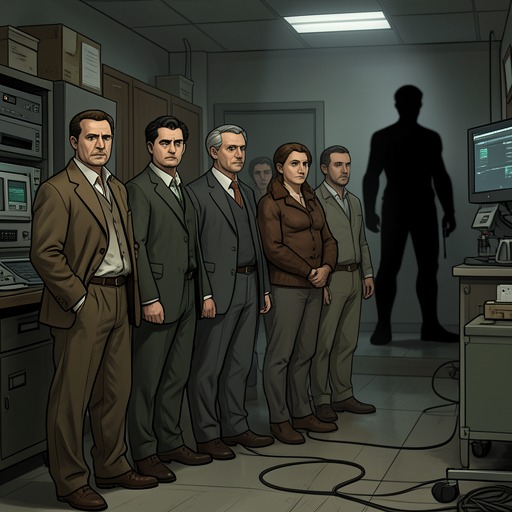
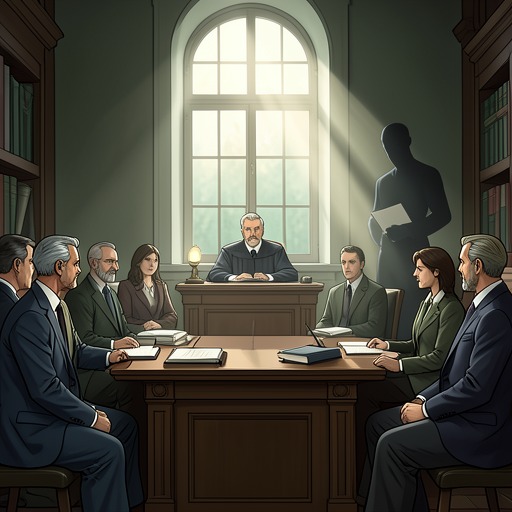
The Outsider (Stephen King Edition)The machine is the novel’s metaphor for the criminal-justice process as an impersonal system that can seize a person’s life before the evidence has been fully tested. In the case against Terry Maitland, arrest, forensic claims, public exposure, and the coming arraignment acquire a momentum of their own. Even a powerful alibi does not immediately stop that momentum; the possibility of release is not the same as escape from its effects.
The Case Before the Arrest
Ralph Anderson recognizes the danger of proceeding too quickly even as he believes the investigators have the right man. In a pre-arrest conference with Bill Samuels, the Flint County district attorney, Ralph says that the investigation still has rough edges, that they lack background, and that Terry will claim an alibi. Samuels answers that they will knock it down. Ralph’s concern is not that the case appears weak to him, but that the team is about to act before completing the work he considers proper. He would ordinarily prefer to identify gaps in the alibi and widen them before making an arrest; in this case, the urgency overrides that preference.
That decision gives the machine its first momentum. The public arrest and accumulating allegations make the process visible before its contradictions have been resolved. During questioning, Ralph lists fingerprints said to connect Terry to the van, the boy’s bicycle, a toolbox, a Subaru, and an object associated with the assault. The stated strength of this physical evidence stands against Terry’s apparent surprise and the developing alibi. The passage presents the prosecution’s evidence as forceful in the room, but it does not make the unresolved conflict disappear.
The investigation also demonstrates how testimony and timing can reinforce an initial theory. June Morris identifies a photograph as Coach Terry during a police lineup. Ralph, meanwhile, recalls Arlene Stanhope’s account that she saw Terry placing Frank Peterson’s bicycle in the van at about three o’clock, an account tied to the Town Hall clock striking the hour. Each item seems to supply a recognizable person or a fixed moment; together, such details help make the accusation appear coherent before the competing evidence is assembled.
The Alibi and the Records That Challenge It
The challenge arrives through records rather than a single dramatic revelation. Alec Pelley sends a link to Channel 81, where Ralph finds footage of Harlan Coben speaking to the Tri-State English Teachers. Terry appears at the Cap City Sheraton event, and the recording supplies a public trace that conflicts with the prosecution’s account of his presence in Flint City. The video does not instantly end the case. Howie Gold warns Terry and Marcy that arraignment is still scheduled and that the prosecution has forensic evidence it considers strong; the conflict will have to be addressed while the legal process continues.
Ralph follows the alibi into the hotel’s own records. The Sheraton manager confirms that Terry and William Quade stayed in room 644, although the bill bears Quade’s signature and the room has since been repeatedly cleaned. Security footage gives Ralph a clearer record than the hotel’s older, less reliable cameras: he sees a man resembling Terry in the lobby and gift shop, exercising in the fitness room, and waiting in the autograph line. The footage makes the alibi substantial in Ralph’s mind, but it does not furnish an easy explanation for how the apparent Terry in Cap City relates to the evidence in Flint City. Ralph’s response is not confidence but the admission that none of it makes sense.
Other records have limits of their own. At the courthouse shooting, television cameras capture Terry’s presence and the fatal event, but the surviving footage is incomplete: a CBS camera goes blank after Ralph’s bullet strikes it. Ralph believes he also saw a burned man beside Terry in the crowd and insists that the other recordings should be checked. Jeannie reviews them and tells him that the man is not visible in any of them. Later, when Holly Gibney asks whether the courthouse footage has been checked, Ralph confirms that the man is absent from every recording. The camera’s failure to record what Ralph says he saw does not establish that he was mistaken, but it leaves his claim without corroboration in the available images. Records can preserve evidence; they can also fail to contain the very thing under dispute.
The Family Inside the Machine
For Marcy Maitland, the system’s power is measured at home as much as in the courtroom. Even after the Channel 81 footage brings relief, reporters and television trucks remain outside, Terry remains in custody, and police have searched the house and removed property. The officers on duty offer no reassurance when Howie asks them to protect the girls from disturbance. Marcy experiences the family as having been swallowed by a machine: the discovery of exculpatory evidence has not yet restored their privacy or control over their lives.
Howie distinguishes between winning an argument and stopping the process already under way. He tells the Maitlands that the video may outweigh the prosecution’s evidence, but that certain machinery has been set in motion. Terry likens the situation to being caught in a Kafka novel or 1984, with Marcy and the girls drawn in alongside him. Howie maps out the immediate procedure: an arraignment before Judge Horton, negotiations with Samuels over bail, and the prospect of home confinement and an ankle monitor. His reassurance that the case can be fought does not make those steps disappear; it makes clear how much the family must still pass through before any legal correction can take effect.
Howie also warns that release from the machine may not remove its shadow. The phrase separates a formal outcome from its lasting social consequences. An accusation can continue to shape how a person and family are seen even if the case against them falters. The novel thus gives the metaphor two linked meanings: the immediate procedures that constrain the Maitlands and the residue of suspicion that may outlast them.
Evidence, Authority, and Retrospect
The machine is not portrayed as running on procedure alone. It also depends on how officials assemble and interpret records. Ralph secretly uses Terry’s print card from evidence to compare prints on a history book in his home. A thumbprint near the spine and four further prints on the back appear clearly after the cover is dusted. The physical object becomes evidence through a chain of handling and interpretation, but Ralph’s method raises a procedural question even as it serves his effort to investigate the case. The novel sets the need to test the accusation beside the rules and choices through which evidence is gathered.
The later explanation of the prosecution’s decision makes the institutional problem explicit. Samuels tells the public that officials did not possess all the relevant facts on the day of Terry’s arrest or arraignment. He also points to DNA that seemed to match Terry, then acknowledges that the Figgis Park samples were mixed with material from both perpetrator and victim, a condition that can make a match unreliable. The retrospective account does not erase Ralph’s earlier misgivings about moving too fast; instead, it shows how an apparently powerful forensic claim can sustain the case even when its evidentiary basis needs qualification.
Across these episodes, the machine’s power comes from momentum, not infallibility. An identification, a forensic claim, a public arrest, and an arraignment can reinforce one another before contradictory information has been fully evaluated. A recording may give the defense a crucial alibi, while other recordings fail to preserve what a witness believes was present. The metaphor therefore joins institutional pressure to the limits of evidence: correcting an accusation requires more than discovering a contradiction, because the process has already reached into the accused person’s family, reputation, and daily life.